
 Australian Dollars
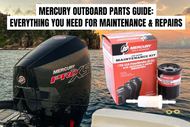
Mercury Outboard Parts Guide: Everything You Need for Maintenance & Repairs
14th Apr 2026
Mercury outboard parts are the difference between a clean day on the water and sitting at the ramp wondering what went wrong. Most issues don’t come out of nowhere. They build slowly. A tired impeller, a blocked filter, a worn seal. Leave them too long, and the motor lets you know at the worst time.
If you run a Mercury outboard, you already know how quickly a small problem can turn into lost time or a costly repair. Staying on top of your Mercury outboard motor parts is how you avoid that. Get the right parts in early, fit them properly, and your engine will reward you with reliability.
Why Mercury outboards fail when parts are ignored
Outboards work hard. Salt sits in cooling passages. Fuel quality varies. Engines sit idle for weeks, then get pushed hard all day. That mix is what causes most failures.
Take a typical 150HP Mercury four-stroke. If the impeller hasn’t been changed in a couple of seasons, it might still pump water at idle on the hose. Get it under load offshore, and you can suddenly see temps climb. That is not bad luck. That is maintenance missed.
The same goes for fuel systems. A partially blocked fuel filter might not show up straight away. You’ll feel it as hesitation when you push the throttle. Leave it longer and you risk damage to injectors or fuel pumps.
These are not rare cases. This is what marine workshops deal with every week. Staying on top of your mercury marine parts stops small issues becoming big ones.
Most common Mercury outboard parts you’ll replace
Some parts wear out on schedule. Others fail with age. Either way, these are the mercury engine parts you’ll deal with regularly if you own or service a Mercury outboard.
Service kits
Service kits take the guesswork out of routine maintenance. A proper kit matched to your engine will include filters, spark plugs, gaskets and small service items. Instead of chasing each part, you get everything together.
For example, a 300 hour service kit for a Mercury outboard will usually cover oil filter, fuel filter, spark plugs and water pump kit. It saves time and reduces the chance of missing something.
Impellers and water pump parts
Impellers are one of the most common failure points. Rubber hardens. Blades crack. If a motor has been sitting, the impeller can deform before you even start it.
You might notice a weaker tell tale. You might not. Plenty of impellers fail without much warning.
Most mechanics will tell you to change the impeller every 100 hours or once a year if the boat gets regular use. For boats that sit, time matters more than hours.
Filters
Fuel filters and water separating filters are cheap compared to what they protect. Dirty fuel is still one of the biggest causes of poor running in outboards.
A blocked filter can cause:
- Hard starting
- Loss of top end power
- Surging under load
Oil filters on four strokes also need regular replacement. Skip them and you are asking for long term wear.
Spark plugs and ignition parts
Spark plugs don’t fail overnight. They fade. Idle becomes rougher. Starting takes longer. Fuel use creeps up.
Most plugs should be checked around 100 hours. By 150 hours, many are ready to be replaced depending on engine use.
Coils and ignition components can also fail over time, especially in salt environments.
Thermostats and cooling components
Thermostats control engine temperature. If one sticks open, the engine runs cold and inefficient. If it sticks closed, temperatures rise fast.
Cooling issues are often ignored until an alarm sounds. By then, you are already behind.
These mercury outboard replacement parts are simple but important.
Anodes
Anodes are there to be eaten away instead of your engine. Once they are gone, corrosion moves to more expensive components.
Check them regularly. Replace them before they are fully depleted.
Small wear items that cause big problems
Not every issue is obvious. A leaking seal. A cracked fuel line. A failing primer bulb. These smaller mercury motor parts are often the reason a boat becomes unreliable.
They are also the easiest to overlook.
Choosing the right Mercury outboard parts for your engine
Getting the right outboard parts mercury owners need starts with proper identification.
Horsepower alone is not enough. Mercury has multiple engine families across different years. Two 115HP engines can use different parts depending on model and production run.
The best way to match parts is with the engine serial number. That removes the guesswork and gets you the right fit the first time.
Here is where most people get caught out. They order based on what they think they have. The part arrives. It looks close, but not quite right. Now the boat is apart and you are waiting on the correct item.
If you are unsure, ask before you buy. It saves time, money, and frustration.
Genuine vs aftermarket Mercury outboard parts
Both options have their place.
Genuine mercury marine parts are built to factory spec. They are a safe choice for newer engines or when you want exact fitment.
Aftermarket parts can also perform well when they come from trusted marine brands. Many service items, such as filters, anodes, and impellers, are available in quality aftermarket options that offer good value.
The key is not just the label. It is whether the part is built for your engine and will hold up in marine conditions.
Cheap parts that fail early are not a saving. They cost you twice.
Signs your Mercury outboard needs parts sooner than expected
Engines usually give warning signs. You just need to know what to look for.
A few examples:
- Weak water flow from the tell tale after startup
- Engine running hotter than usual
- Slower acceleration or reduced top speed
- Rough idle or misfiring
- Increased fuel use
- Visible corrosion on external components
A common scenario. You launch after a few months off. The engine starts fine. At idle everything looks normal. Once you push past mid range, the motor feels flat. That is often fuel related. Filters, lines, or pumps.
Ignore it and it gets worse.
Maintenance parts vs repair parts
There is a clear difference.
Maintenance parts are planned. Filters, spark plugs, impellers, anodes. These are replaced on a schedule to keep the engine healthy.
Repair parts are reactive. Starter motors, fuel pumps, sensors, trim components. These are replaced when something fails.
Most experienced boat owners try to stay ahead of maintenance. It is cheaper and far less stressful than dealing with breakdowns.
Why fitment support matters when buying Mercury parts
Boat parts are not forgiving. Close is not good enough.
A slightly different impeller can reduce water flow. The wrong filter thread can leak. Incorrect anodes may not protect properly.
This is why buying from a specialist matters. Someone who understands Mercury outboard parts can help match the right product to your engine and avoid mistakes.
For trade customers, that means fewer delays. For boat owners, it means getting back on the water faster.
Building a smarter spares plan
If you use your boat regularly, it pays to keep a few items on hand.
Most Mercury owners will carry spare spark plugs, filters, fuses, and basic service items. If you run offshore, you might also carry an impeller or fuel components depending on your setup.
Think about how you use your boat. A weekend cruiser has different needs to a commercial operator or serious offshore fisherman.
Planning ahead reduces downtime.
Get the right Mercury outboard parts the first time
Finding the right mercury outboard parts should not be a guessing game. The goal is simple. Get the correct part, fit it once, and trust it on the water.
Boaters World stocks a wide range of genuine and aftermarket mercury outboard motor parts to suit different engines and budgets. If you are not sure what you need, reach out with your engine details, and we will point you in the right direction.
You can browse the full range online or speak with the team that understands the parts and how they fit. Either way, you will spend less time second-guessing and more time on the water.